


A Comprehensive Guide to Game Localization: Interview to Luiz Lendengues
Gaming
04 Dec 2025
Localizing a video game is one of the most intricate forms of translation. It involves cultural insight, technical accuracy, narrative awareness, and strong collaboration between translators, reviewers, and project managers. To create a localized version that feels natural, the content must be adapted to a target market rather than converted line by line. This guide explains the process in detail, drawing from industry expertise and practical experience from TextTrans and our game specialist, Luiz Lendengues.
The aim is to provide a full picture of what game localization requires, how teams prepare, the tools involved, the challenges that can arise, and the future of the field. Because the Brazilian Portuguese market is one of the fastest-growing audiences for global game publishers, the guide also highlights insights relevant to this region.
Meet the expert: Luiz Lendengues
Before diving into workflows and technical steps, it helps to understand the perspective of someone who works with gaming content every day.

Luiz is a full-time Language Specialist at TextTrans. He holds a degree in Translation from the Federal University of Rio Grande do Sul in Brazil, where he focused on narrative theory and how narratology connects with translation craft. He has worked in localization since 2016, gaining experience in marketing, IT, and medical content as well as gaming. His current responsibilities include:
• Reviewing translated files for accuracy and fluency
• Conducting full QA checks
• Creating internal glossaries
• Handling client feedback
• Supporting project managers with linguistic guidance
• Translating when needed, especially for game-related material
He is also a gamer. This matters more than people think. The ability to understand gameplay conventions, worldbuilding logic, and genre tropes helps specialists detect nuances that might be missed by translators without that background.
What game localization involves
Localization is not only about turning English text into another language. It includes:
• Cultural adaptation
• Narrative interpretation
• Replacement of humor or references that may not resonate in the target region
• Adjusting tone, social conventions, and slang
• Ensuring UI, menus, and system messages fit the visual constraints of each device
The result should feel natural to the target audience, as if the game originated in that language.
Games include these elements simultaneously:
| Component | Description |
| Dialogue | Conversations between characters, voiced or written |
| Lore | Worldbuilding elements, histories, cultures, and textual artifacts |
| UI | Menus, settings, tooltips, buttons, stat screens |
| On-screen prompts | Instructions shown during play, often time-sensitive |
| Cutscenes | Story-driven sequences that may require subtitling |
| Items and abilities | Names of weapons, spells, collectibles, perks |
| Tutorials | Step-by-step instructions that must be clear and concise |
Every category has different constraints. UI elements may have strict character limits. Lore passages may need creative expansion. Tutorials must remain readable under pressure. Dialogue must respect character personality.
Why creativity is essential in game localization
Games often create their own languages, species, places, and cultures. They also include repeating themes such as magic systems, sci-fi technology, or fictional political structures. Translators must understand complex lore and invent terms that fit the world.
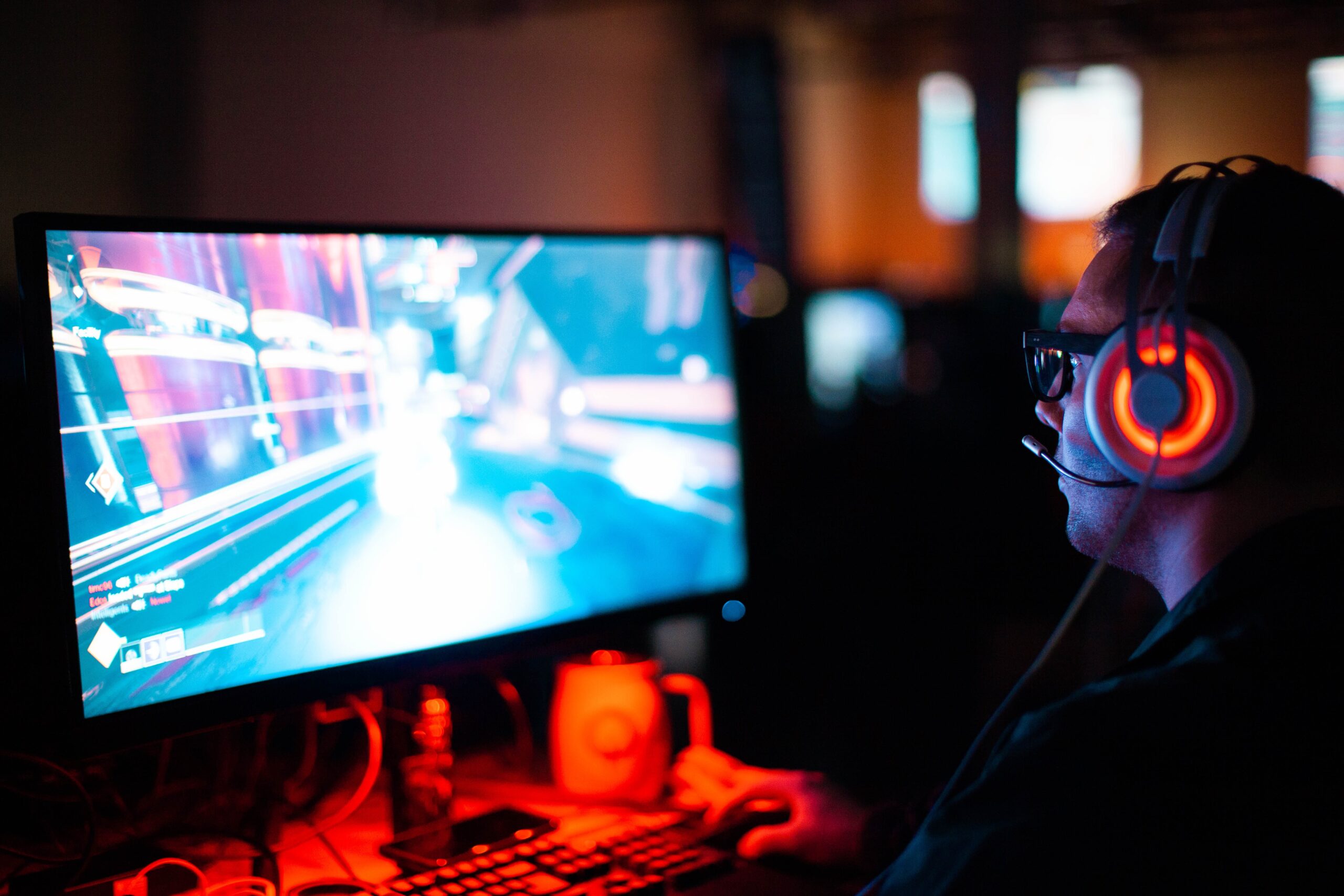
Luiz describes this as a mixture of creativity and discipline. A translator must maintain consistency for terms that appear thousands of times while also crafting imaginative solutions when literal equivalents do not exist. For example, the Brazilian Portuguese version of the Goth family in The Sims did not settle for the literal “Gótico.” The chosen equivalent, “Caixão,” reflects the original meaning while sounding natural as a Portuguese surname.
Preparing for a game localization project
Strong preparation determines overall quality.
Translators usually begin by reviewing any reference material provided. This may include:
• Style guides
• Character descriptions
• Termbases
• Past titles in the franchise
• Voice actor notes
• Screenshots
• Early builds or demos
• Developer commentary
However, access varies. Confidentiality often prevents studios from sharing screenshots or builds, especially for unreleased titles. In many cases, translators receive strings with no context. This is where industry experience plays a key role. Without visuals, a translator must infer relationships between characters, understand mechanics, and determine tone.
When a demo is available, it helps the team understand gameplay rhythm and how elements connect. According to Luiz, even limited access can significantly improve decisions during translation.
The role of CAT tools and technology
Technology shapes every stage of game localization. While creative decision-making drives character voices, lore, and worldbuilding, a game cannot be delivered without the underlying tools that keep terminology, formatting, and workflows consistent.
CAT tools in practice
Game scripts often run into tens or hundreds of thousands of words. They are rarely linear, and they almost never arrive as tidy narrative chapters. Instead, linguists receive strings pulled from UI, cutscenes, battle sequences, tutorials, and system prompts. CAT tools give translators the structure to make sense of this complexity.
Most studios and LSPs gravitate toward environments like memoQ or Trados Studio. Both allow translators to work segment by segment, search for earlier occurrences of terms, and access the translation memory created by the team. When the translation is stored centrally, a weapon name or mission title keeps appearing with the same wording, even if the team handles content in batches.
When the work shifts to online platforms
Some projects move fast. The development team modifies dialogue or UI as the game is polished for release. In these cases, translation needs to keep pace with updates. Platforms such as Smartcat or Crowdin allow multiple linguists to work simultaneously while testers continue adjusting game files in the background.
A translator working on an online platform might see updated strings appear halfway through a shift. This demands flexibility and a strong sense of context, because changes can alter quest logic, dialogue tone, or even entire gameplay systems.
The subtitling layer
Subtitling introduces a different set of constraints. Timing matters. Reading speed matters. Speaker identification matters. Tools like SubtitleEdit let linguists work frame by frame to check whether a line appears too early, disappears too quickly, or overlaps visually with another element in the scene. Unlike standard text localization, subtitling forces translators to think about how long the viewer’s eyes remain on each line and how much information they can realistically absorb.
The full workflow in game localization
Game localization moves through several interconnected stages, each shaped by the type of text and the genre of the game.
Familiarization and context-building
Some translators begin with a playable demo. Others have only a spreadsheet of lines without speaker tags. When context is missing, translators rely on research, developer notes, previous entries in the franchise, or their own gaming intuition. Luiz emphasizes that familiarity with gameplay mechanics helps fill in the blanks. If a string refers to “Charged Burst,” a linguist who plays shooters will instinctively understand how this ability behaves, even without visuals.
Translation in real conditions
During translation, the linguist adapts tone, pacing, and terminology. This is the moment when creativity matters most. Dialogue must sound natural aloud. UI terms must remain short without losing meaning. Lore passages must remain consistent with the game’s worldbuilding logic.
Navigating fictional worlds
Many games take place in universes with invented species, currencies, cultural structures, and magical systems. Every new name must follow the internal rules of that world. An invented mineral or spell must be translated with an ear for phonetic balance, thematic consistency, and readability.
Review as a narrative safeguard
Reviewers look beyond grammar. They check internal coherence, verify that the same item does not receive three different names, and ensure emotional beats remain intact. In story-heavy titles, a reviewer may detect subtle shifts in register that the translator missed. Characters age, mature, lose hope, regain confidence, or adopt new speech patterns. These shifts should appear in the localized version too.
Quality assurance and visual testing
After linguistic review, QA focuses on the nuts and bolts. The reviewer checks for truncated UI text, broken variables, punctuation errors, or subtitle timing issues. If the client provides access to the interface, even partial access, testers simulate user actions to see how text behaves in real screens.
When full testing is unavailable
Studios often restrict access to builds. In these cases, teams work with screenshots or limited UI exports. QA might involve adjusting text lengths blindly, trusting experience to guide safe choices. It is not ideal, but it is common in the industry, and strong teams build workflows that compensate.

Subtitling challenges in gaming
Some cutscenes include chaotic multi-speaker exchanges. When several characters speak at once, the linguist must decide which lines carry narrative weight. Luiz describes a project in which overlapping dialogue created impossible visual density. Omitting a line felt uncomfortable but was the only way to maintain readability. These decisions require careful judgment rather than mechanical translation.
When players read during action
Players often read subtitles while moving, fighting, or navigating. Subtitles cannot assume the viewer is stationary. Too much text can cause frustration, which is why short phrasing and sharp summarization matter.
Ethical considerations in gaming localization
Games reflect cultures. Some regions tolerate strong profanity, while others expect toned-down expressions even in informal dialogue. Political allusions, religious symbols, and social references may need adaptation to avoid misinterpretation. Translators must protect the integrity of the narrative while keeping content appropriate for the region where it will be released.
Navigating restrictions without flattening meaning
The challenge is adjusting without censoring the personality of the character. A hot-headed protagonist who curses in English should not suddenly sound polite in another language. The transformation must feel authentic to both the character and the culture.
Context gaps and how translators solve them
Context is the number one challenge in game localization. Scripts are rarely delivered in chronological order. Quests overlap. Dialogue repeats. System messages are detached from gameplay.
Techniques used to fill missing context
Translators often:
• Analyze nearby strings for clues
• Check previous franchise entries
• Search community wikis
• Watch trailers
• Review gameplay footage
• Consult team glossaries
• Ask the client for clarification when possible
Some of these steps become essential when the client is slow to reply or when confidentiality prevents the sharing of screenshots.
The “intuition factor”
Experienced game translators develop an instinct for patterns. They recognize when a string is probably a tutorial prompt rather than dialogue, or when a line is a boss warning instead of a friendly remark. This intuition is built through years of playing, watching, and analyzing games.
Market insight: the rise of Brazilian Portuguese
Brazil’s player base is large and active across PC, console, and mobile. Yet only a small percentage of the population speaks English. This makes localization essential for reaching the market.
LocalizedDirect lists Brazilian Portuguese among the top target languages for global game releases. Developers see immediate benefits in engagement and retention when ptBR is included at launch. That shift increases demand for specialized linguists who know the culture and the fast-changing slang of Brazilian gaming communities.
Market penetration and expectations
Brazilian audiences expect localized UI, localized subtitles, and, when possible, localized voiceovers. Partial localization is no longer enough for most studios targeting the region.
The role of narrative in gaming localization
Luiz’s background in narratology helps illustrate how localization interacts with story structure. Narrators shift perspective. Characters grow. Questlines branch. A good localization mirrors those arcs. A character who starts naïve and becomes hardened should reflect that evolution linguistically.
Narrative games also depend on environmental storytelling. Clues appear in tooltips, flavor text, item descriptions, and background audio. These elements can be small, but they build the emotional and intellectual texture of the game world. A single mistranslated clue can disrupt immersion or mislead players. The localizer must understand the purpose of each element, even when the source text offers little explanation.
When machine translation fits and when it doesn’t
Machine translation can accelerate basic assets but falls short for creative text. MT may be useful for repetitive UI strings, technical labels, or placeholder data. Anything related to story, humor, or lore should remain fully human. MT struggles with invented terms, sarcastic tone, and idiomatic phrasing common in character dialogue.
Avoiding fragmentation
If MT is used, it must be integrated carefully. An inconsistent mixture of MT and human-crafted content can make the game feel patchy. Reviewers must unify tone across sections.
Luiz Lendengues’s advice for aspiring gaming linguists
Luiz encourages new linguists to explore games across multiple devices and genres. Playing both the original and localized versions offers a practical education in what works and what does not. Researching how studios design mechanics also helps translators understand why certain elements must remain unchanged.
Building long-term expertise
Staying informed about gaming communities, watching developer interviews, and observing patch notes all help build a translator’s intuition.
The future of game localization
Demand continues to grow as games expand across platforms and genres. Live-service models require continuous localization. Cross-platform play creates more complex linguistic ecosystems. Cultural expectations shift quickly, influenced by online communities and social trends.
What this means for linguists
Linguists will need stronger technical skills, more familiarity with narrative structures, and deeper cultural understanding. The blend of creative writing and technical precision will continue to define the field.

Luiz Lendengues
Language Specialist
TextTrans